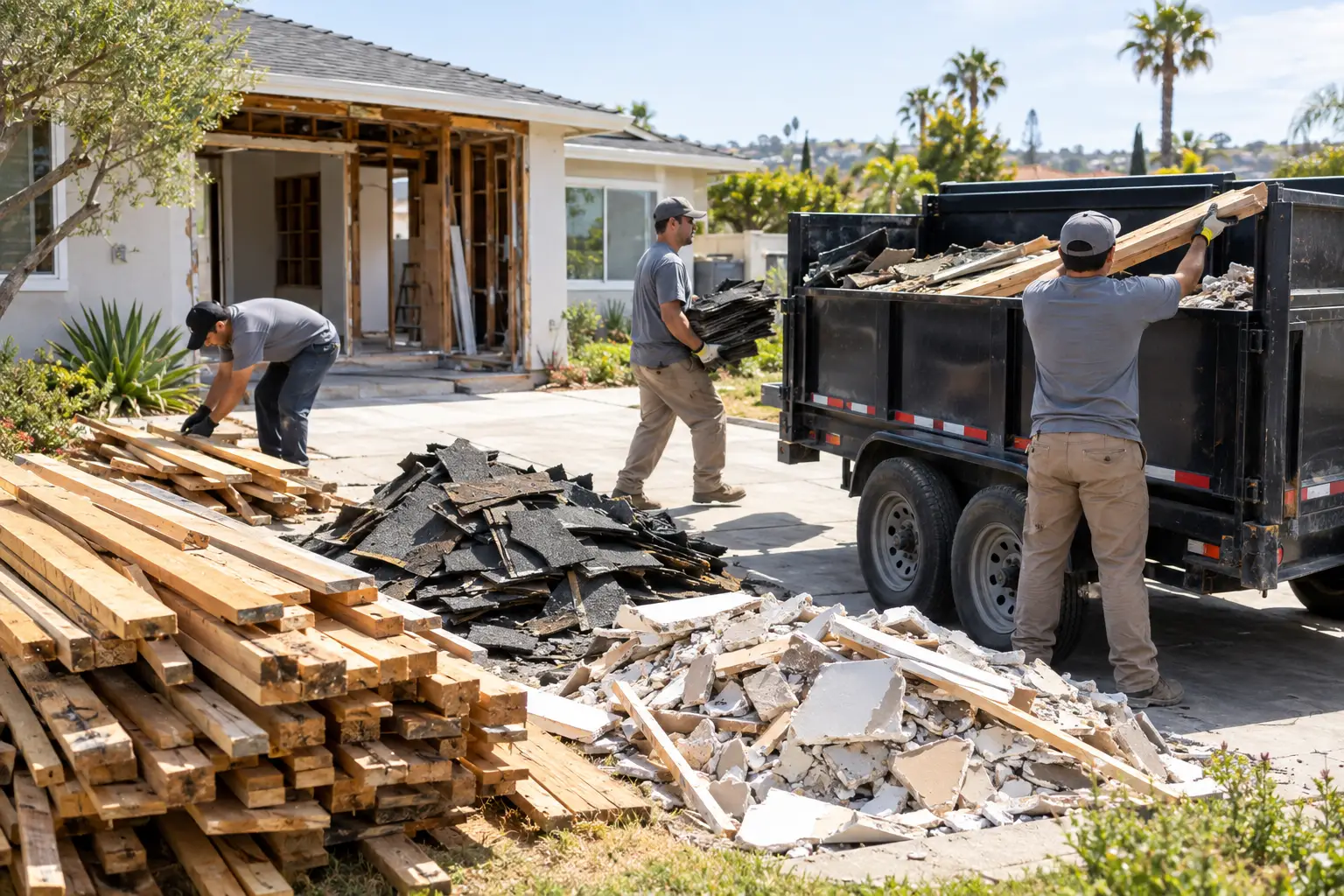
Keep heavy mineral material separate from lighter mixed debris, and isolate anything sharp, wet, unlabeled, or potentially hazardous. A clean staging area makes the material easier to assess and load.
Separate by weight and handling
Keep concrete, brick, tile, and soil apart from lumber, drywall, roofing, and packaging. Heavy material can require a different loading and disposal plan.
Control sharp edges
Stack lumber in one direction and keep protruding fasteners away from walkways. Place broken glass and sharp metal where they can be seen and assessed before handling.
Do not guess about hazardous material
Unknown insulation, suspect asbestos-containing material, chemicals, fuels, and wet paint should remain undisturbed until the proper route is confirmed.
Protect the pickup path
Keep debris off sidewalks, drains, landscaping, and shared access. Leave enough room for safe movement between the pile and the vehicle.
Next step
Read the construction debris removal scope, then use the estimate-preparation guide to gather the details that affect the job.