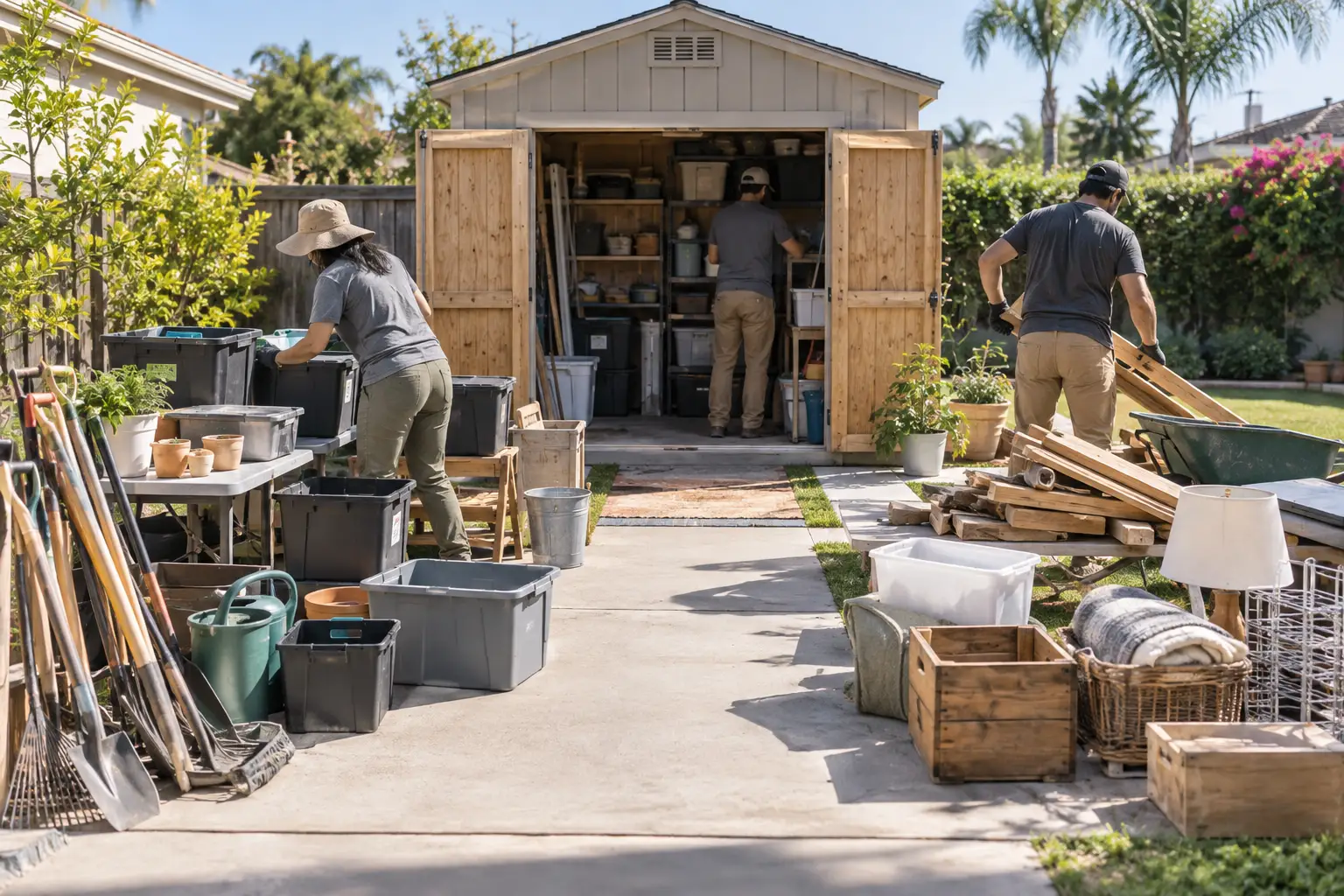
Remove personal records, valuables, chemicals, fuel, and anything you plan to keep before the crew arrives. Group the remaining ordinary contents by type and leave a clear path from the shed to the gate.
Start with the items only you can identify
Take out keys, documents, photographs, keepsakes, and loose hardware that belongs to other equipment. A removal crew cannot reliably decide what has personal value.
Separate materials that need another disposal route
Paint, solvents, pesticides, fuel, propane cylinders, batteries, and unknown containers should not be mixed with ordinary shed contents. Keep labels intact and check the current household hazardous-waste guidance for your city or county.
Make the carry path visible
Open the gate, trim back temporary obstructions, secure pets, and show the narrowest point on the route. Photograph steps, slopes, air-conditioning units, and tight corners when you request an estimate.
Use a four-zone sort
Mark four areas: keep, ordinary haul-away, special handling, and undecided. The undecided pile is the one that slows a job, so settle it before arrival when possible.
Next step
Read the shed cleanout scope, then use the estimate-preparation guide to gather the details that affect the job.