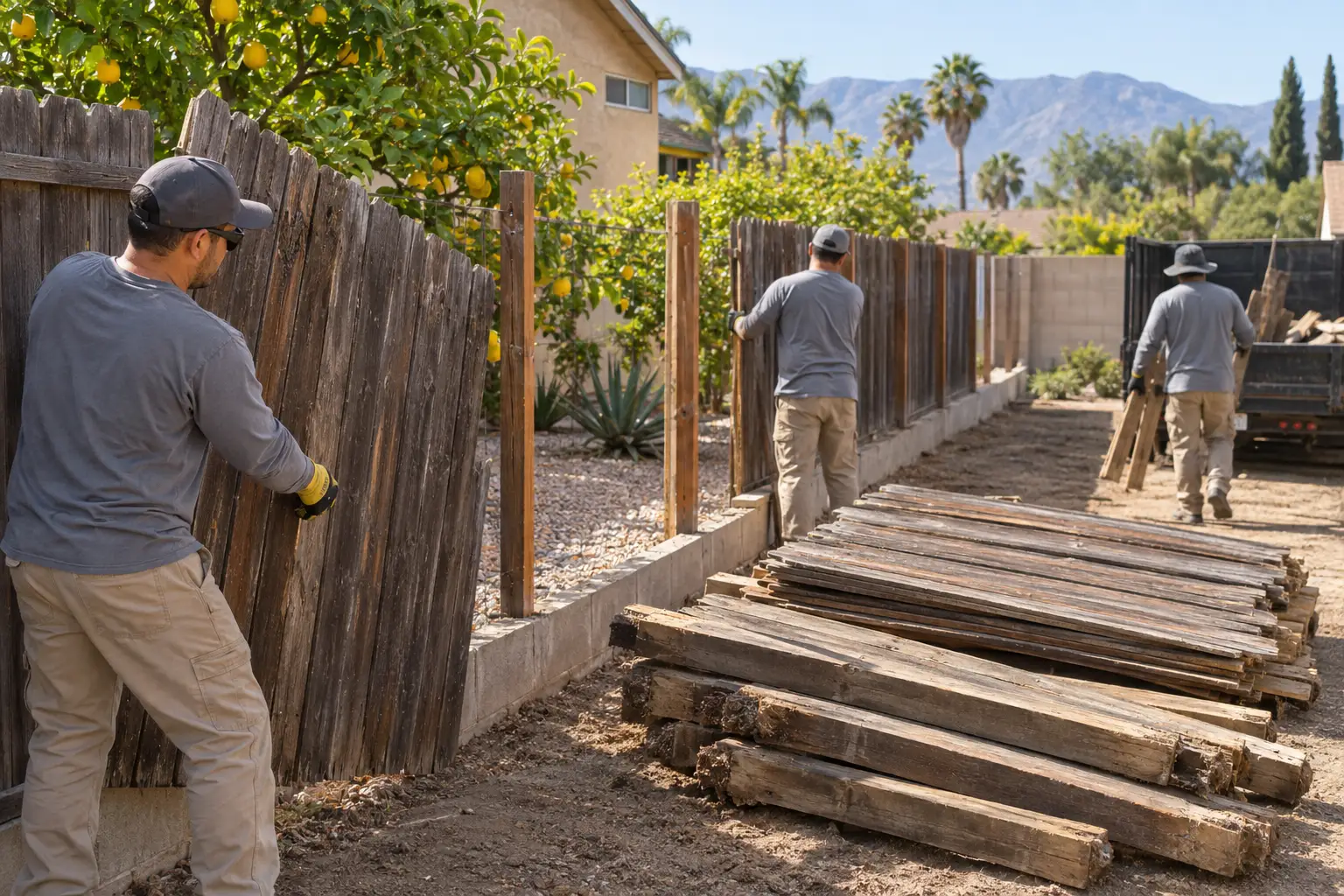
Confirm ownership and boundaries before anyone removes a fence. Then identify public and private utilities, gate access, vegetation, and the sections that must remain.
Resolve permission first
Do not treat a fence’s location as proof of ownership. Check records, agreements, and neighbor responsibilities before scheduling removal.
Locate more than public utilities
Public utility marking may not identify private irrigation, lighting, pool, gate, or low-voltage lines. The owner should point out known private systems and recent changes.
Define the stopping points
Mark the exact panels, posts, gates, and hardware included. Photograph corners and transitions to walls or neighboring fence styles.
Plan for posts and concrete
Post depth, concrete collars, slope, roots, and retaining features change the work. Masonry or structural retaining elements need a different assessment.
Next step
Read the fence removal scope, then use the estimate-preparation guide to gather the details that affect the job.